
Description
Bring learning to life with Virtual Reality
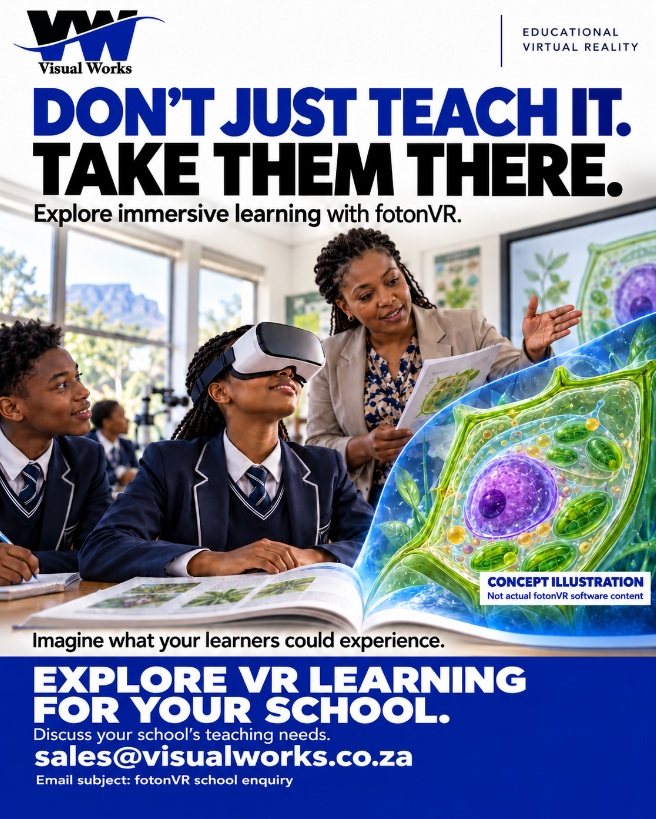
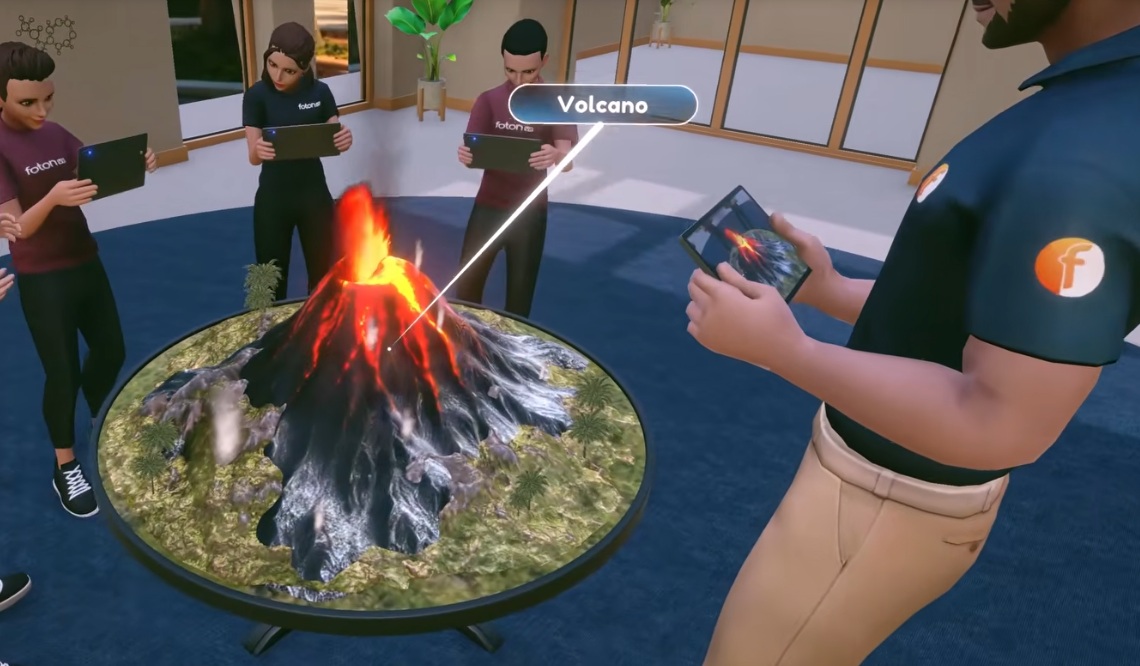
fotonVR transforms traditional lessons into immersive learning experiences that allow students to see, explore, and interact with concepts in 3D and 360° virtual environments.
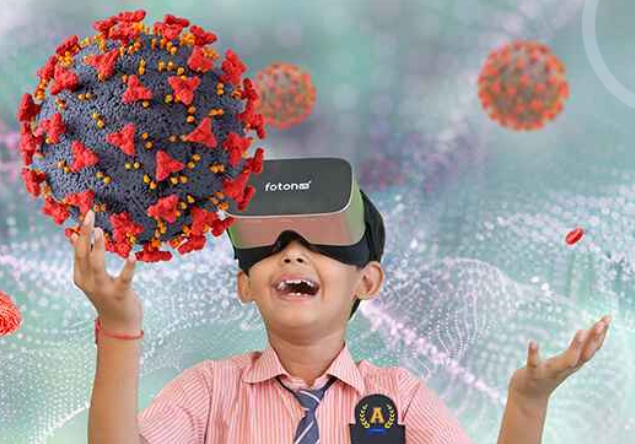
Instead of only reading about a cell, molecule, planet, or scientific process, learners can step inside the experience and explore it visually – helping difficult or abstract concepts become easier to understand.
Designed to support teachers rather than replace them, fotonVR combines teacher-led instruction with immersive virtual learning, giving educators another powerful way to explain concepts and keep learners engaged.
With a growing library of 850+ learning concepts, fotonVR supports subjects including Science, Biology, Chemistry, Physics, History and Environmental Studies.
Why schools choose immersive learning
- Makes abstract concepts easier to visualise
- Encourages learner curiosity and participation
- Supports practical and experiential learning
- Gives teachers visual tools for explaining difficult topics
- Allows virtual experiments and exploration in a controlled environment
- Adds immersive technology to existing classroom teaching rather than replacing it
What can students experience with fotonVR?
fotonVR gives learners access to immersive educational experiences that move beyond the textbook and into interactive 3D and 360° environments.
Students can explore concepts such as:
- Human Biology — travel inside the human body, explore organs, blood flow, cells and biological systems.
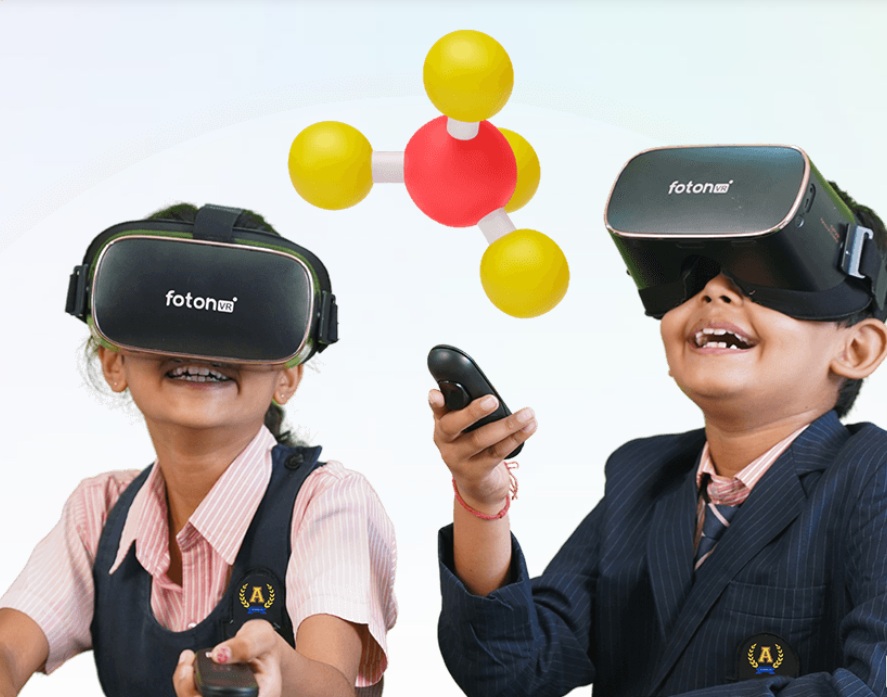
- Chemistry — examine molecules and atomic structures in 3D and explore virtual experiments in a controlled environment.
- Physics — visualise forces, motion, energy and other scientific principles that can be difficult to explain using static diagrams alone.
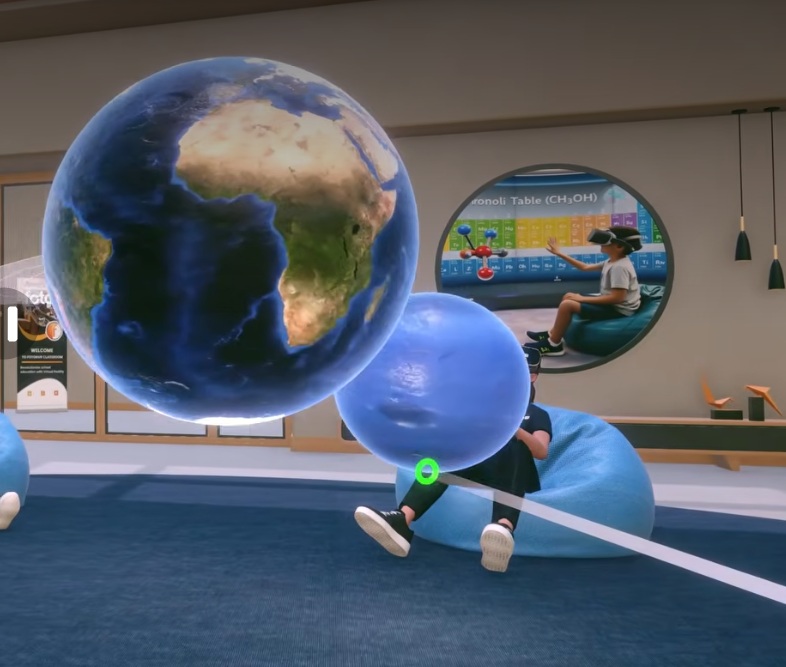
- Space & Astronomy — explore planets, celestial bodies and space environments from an immersive perspective.
- Environmental Studies — experience natural systems, environments and scientific concepts visually.
- History — explore historical subjects through immersive visual content.
- Virtual Science Experiments — conduct practical learning activities in a virtual environment without requiring every experiment to be physically recreated in the classroom.
fotonVR currently promotes a library of 850+ educational concepts, including content across Science, Biology, Chemistry, Physics, History and Environmental Studies.
From “tell me” to “show me”
Some concepts are difficult for learners to understand because they are too small, too large, too dangerous, too expensive or simply impossible to bring into an ordinary classroom.
Virtual reality allows teachers to show learners those concepts in a way that feels more tangible and memorable, while still keeping the teacher at the centre of the lesson.
How fotonVR works in the classroom
fotonVR is designed to work with the teacher, not around the teacher.
The educator introduces and explains the lesson as usual, while VR is used to give learners a visual and immersive experience of the concept being taught.
A typical learning session can include:
- The teacher introduces the topic and explains the key learning objectives.
- Learners enter the virtual environment using compatible VR headsets.
- Students explore the relevant 3D or 360° educational content.
- The teacher guides the lesson, asks questions and connects the virtual experience back to the curriculum.
- Learners return to normal classroom discussion, activities or assessment with a stronger visual understanding of the topic.
A teacher-led immersive learning approach
fotonVR describes this as a hybrid learning model, combining teacher instruction with immersive visual learning.
This means schools do not need to replace their existing teaching methods. Instead, VR becomes an additional teaching tool that can help educators explain difficult concepts more clearly and make selected lessons more memorable.
Teacher preparation is also important. fotonVR’s school implementations include training teachers to operate the VR equipment and conduct learning sessions, helping educators become comfortable with the technology before using it with students.
Who is fotonVR for?
fotonVR is suited to education environments looking for practical ways to make teaching more visual, immersive and engaging.
It is especially relevant for:
- Primary and Secondary Schools looking to introduce immersive learning into the classroom.
- Principals and School Governing Bodies evaluating future-focused education technology and planning for upcoming budgets.
- Science Departments and Laboratories wanting to strengthen the way complex scientific concepts are demonstrated.
- STEM Programmes that want to combine science, technology and immersive learning experiences.
- VR Classrooms and Innovation Labs creating dedicated spaces for interactive learning.
- Training Centres and Educational Institutions exploring visual, experiential teaching methods.
- Teachers who embrace technology and want another tool to help learners understand concepts that are difficult to visualise through textbooks alone.
Start with the lesson, not the technology
The strongest VR implementations begin with a simple question:
“What do our learners struggle to picture or understand?”
From there, schools can identify the subjects and lessons where immersive learning could add the greatest value and build a solution around their actual teaching requirements.
Visual Works can assist with the VR hardware, fotonVR software, classroom setup and solution planning required to turn that idea into a practical education environment.
What can a fotonVR solution include?
A fotonVR implementation can be tailored around the number of learners, subjects, available space and the way your school plans to use virtual reality.
Depending on your requirements, a Visual Works solution can include:
- fotonVR educational software and immersive learning content
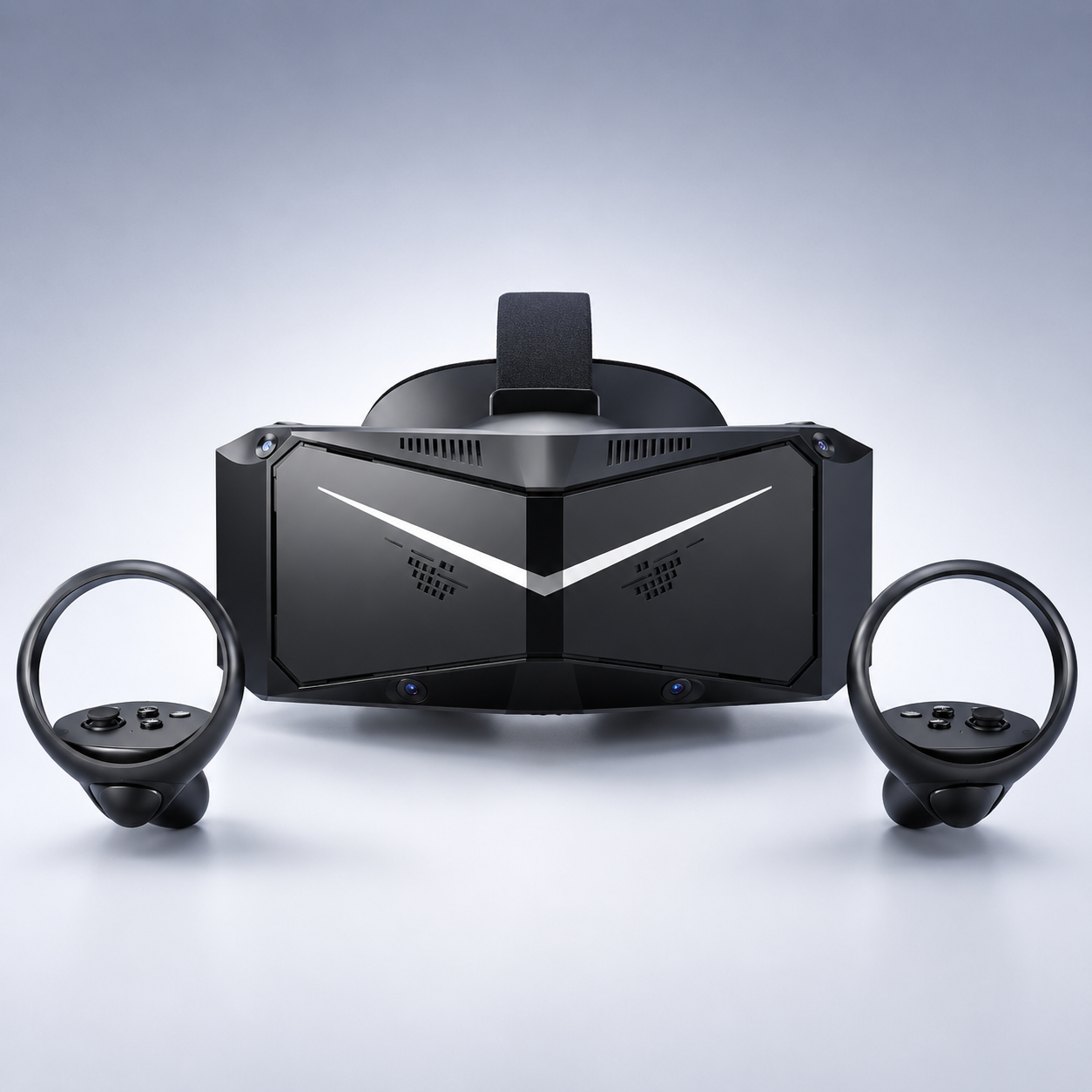
- Compatible VR headsets
- Access to a library of 850+ immersive learning concepts
- VR classroom or dedicated VR lab setup
- Teacher orientation and training
- Solution planning based on learner numbers and intended applications
- Charging and storage options for VR equipment
- Installation, setup and technical support
- Expansion planning as your VR programme grows
Built around your school
There is no reason every school should start with the same VR configuration.
A smaller school may begin with a limited number of headsets and selected subjects, while another institution may want to establish a dedicated VR laboratory serving multiple classes.
Visual Works can help you determine the right starting point based on:
- Number of learners
- Number of simultaneous VR users
- Subjects and grade levels
- Available classroom or laboratory space
- Existing technology infrastructure
- Teacher readiness
- Budget
- Future expansion plans
The result is a VR solution designed around how your school actually intends to teach, rather than simply supplying a box of technology.
Why choose Visual Works for your fotonVR solution?
Buying VR for education should involve more than choosing a headset and installing software.
The real value comes from building a solution that works in the classroom, supports the teacher and can grow with the school.
Visual Works can assist with the complete process, including:
- Solution planning based on your school, subjects and learner numbers
- VR hardware selection to suit the intended application
- fotonVR software and learning content
- Classroom or VR lab design
- Equipment setup and installation
- Charging and storage solutions
- Teacher orientation and implementation support
- Technical support and future expansion planning
With decades of experience in audio visual, multimedia and education technology solutions, Visual Works focuses on creating practical systems that are built around the customer’s actual requirements.
More than a VR Headset
Our goal is not simply to supply equipment.
We help schools look at the complete environment, the learner experience, the teacher, the technology, the physical space and the budget, so that the investment has a clear purpose from the beginning.
Technology Solutions. Built Around You.
Frequently Asked Questions
What subjects are available in fotonVR?
fotonVR offers immersive educational content across subjects including Science, Biology, Chemistry, Physics, Environmental Studies and History, with a library of 850+ learning concepts.
Is fotonVR intended to replace the teacher?
No. fotonVR is designed to support a teacher-led hybrid learning approach. The teacher introduces and explains the lesson while students use VR to explore the concept visually in an immersive environment.
What age or grade group is fotonVR suitable for?
fotonVR offers educational content across multiple school subjects and grade levels. However, hardware platform age requirements must also be considered.
For schools using Meta Quest, fotonVR is currently available only to users older than 13 years, in accordance with Meta Quest platform requirements.
If your school intends to use fotonVR with younger learners, please speak to Visual Works so that we can assess the available hardware and implementation options before a solution is specified.
Can fotonVR be used in an ordinary classroom?
Yes. Schools can integrate fotonVR into existing teaching environments or create a dedicated VR classroom or VR laboratory, depending on the number of learners, available space and intended use.
Do teachers receive training?
Teacher training can form part of a fotonVR implementation. Recent fotonVR school deployments have included practical training to help teachers operate the VR equipment and conduct immersive learning sessions confidently.
Do we need a headset for every learner?
Not necessarily. The number of VR headsets can be planned around class size, lesson structure, budget and how the school intends to rotate learners through VR activities.
Visual Works can help determine an appropriate starting configuration.
Can students perform experiments in virtual reality?
Yes. fotonVR includes immersive and virtual practical learning experiences that allow learners to explore scientific concepts and simulated experiments in a virtual environment.
Is fotonVR aligned to the South African CAPS curriculum?
The fotonVR content library includes many topics relevant to school-level Science, Mathematics, Biology, Chemistry, Physics and other subjects. However, specific CAPS curriculum alignment should be confirmed for the subjects and grades your school intends to use before implementation.
Visual Works can assist you in evaluating the available content against your teaching requirements.
Can we start small and expand later?
Yes. A school can begin with a smaller number of VR headsets or selected subject areas and expand the solution as usage grows, depending on the chosen hardware and licensing configuration.
How do we get a quotation?
Tell Visual Works about your learner numbers, grades, subjects, intended VR applications and available budget, and we can help put together a suitable fotonVR solution and quotation.
Ready to explore VR Learning for your school?
If your school is considering virtual reality for Science, STEM, immersive learning or a dedicated VR classroom, Visual Works can help you turn the idea into a practical solution.
We can assist with:
- Selecting the appropriate fotonVR solution
- Matching compatible VR hardware to your learner age group and intended use
- Planning headset quantities and classroom deployment
- VR classroom or lab setup
- Teacher orientation and implementation support
- Budget planning and quotation preparation
Tell us a little about your school, your learners and the subjects you want to support, and we’ll help you determine a sensible starting point.
Request a quotation from Visual Works and let’s build a VR learning solution around your school.


Reviews
There are no reviews yet.